The smarter, healthier way to design a home that looks after your family.
On a winter morning, the heater may be running, yet the floor feels cold underfoot. The air near a window feels cooler. A slight draught makes you reach for another layer.
That feeling isn’t explained by the thermostat alone. It can also depend on the temperature of nearby surfaces, unwanted air movement and how the home responds to the weather outside.
Passive House starts with the home itself. It brings design, modelling and measurable performance criteria together to help manage heat, fresh air and energy demand from the beginning.
️
Temperature swings
Drafts & breezes
Summer overheating
Condensation & mould risk
Stale, stuffy rooms
️
Dust, smoke & pollen
Noisy interiors
Bill shock & “spiky” use
Cold floors & window chill
️
Durability surprises
️
Dust, smoke & pollen
Noisy interiors
Bill shock & “spiky” use
Cold floors & window chill
️
Durability surprises
The parts work together
A home’s performance doesn’t come from one product. It depends on how its windows, insulation, airtightness, ventilation and construction details work as a connected system.
Insulation slows heat moving through the walls, roof and floor. For it to work well, it needs to be considered across the whole building, including where those elements meet.
Airtightness reduces uncontrolled air movement through gaps and cracks. That can help reduce draughts. It doesn’t mean a home should be sealed without fresh air; ventilation needs to be planned deliberately.
Windows shape both comfort and light. Their position, orientation, performance and installation all affect how a room responds to winter warmth and summer sun.
The small connections matter too. At places where walls meet floors, roofs or windows, careful design can reduce thermal bridges—areas where heat can move more easily through the building.
Ventilation brings fresh air into the picture. A system with heat recovery can supply filtered outdoor air and remove stale air while transferring some warmth between the two air streams.
These principles are most useful when they’re considered together, rather than as separate features on a product list.
How Does It Feel Through the Seasons ?
Hover the chart
Month: —
Passive House: —°C
Standard Home: —°C
Example Passive House Example Standard Home
global standard built around human comfort, health, and efficiency.
Passive House is a scientifically tested building method that delivers:
Consistent 20–25°C indoor temperatures
Fresh, filtered air 24/7
Quiet, calm interiors
Up to 90% lower heating and cooling energy use
Limits condensation, mould risk, or cold spots
It works in any climate — from alpine to coastal.
It’s about performance, not appearance
A Passive House can take many architectural forms. The principles guide how it is designed and checked; they don’t prescribe a particular style.
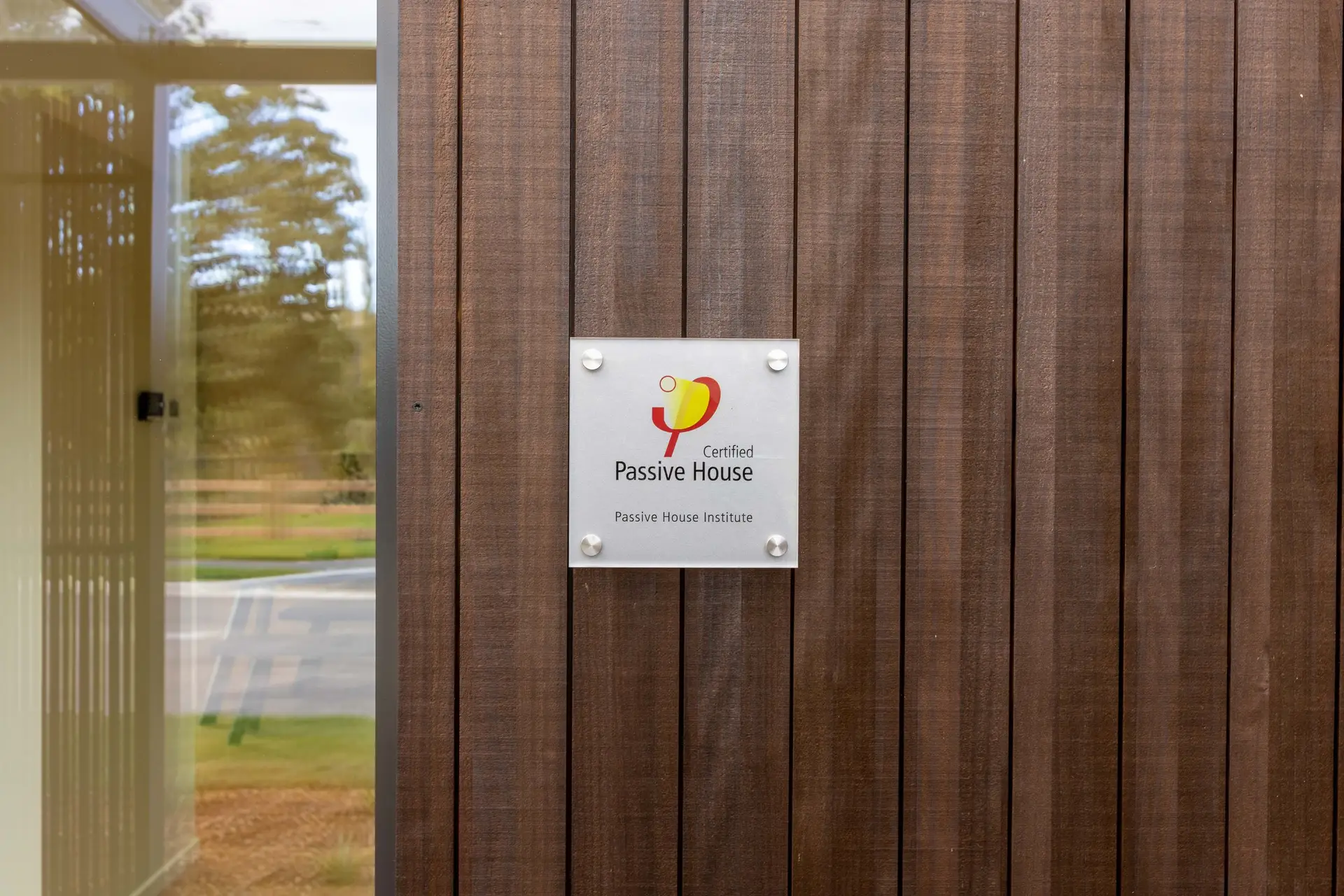
Some projects pursue formal certification. Others use Passive House principles without seeking certification. In either case, the useful starting point is to understand what the home is intended to achieve and how those goals will be considered.
Better questions make better beginnings
If you’re planning a new home or major renovation, a Clarity Call is a calm first conversation about your project and what you hope your home will be like.
 ️
️


 ️
️


 ️
️